Protecting Your AWS Infrastructure from Web and Network Threats
Learn how to protect your AWS infrastructure from unwanted traffic, high-volume requests, and network threats using key protection layers.
A quick look at protecting your AWS applications from unwanted, unexpected, or disruptive internet traffic.
Introduction
Your application may be running normally, but once it is exposed to the internet, it is always receiving traffic. Some comes from real users; some may be unwanted or disruptive.
Without proper protection, "background noise" from the internet can quietly affect your performance, availability, and stability.
The Challenge
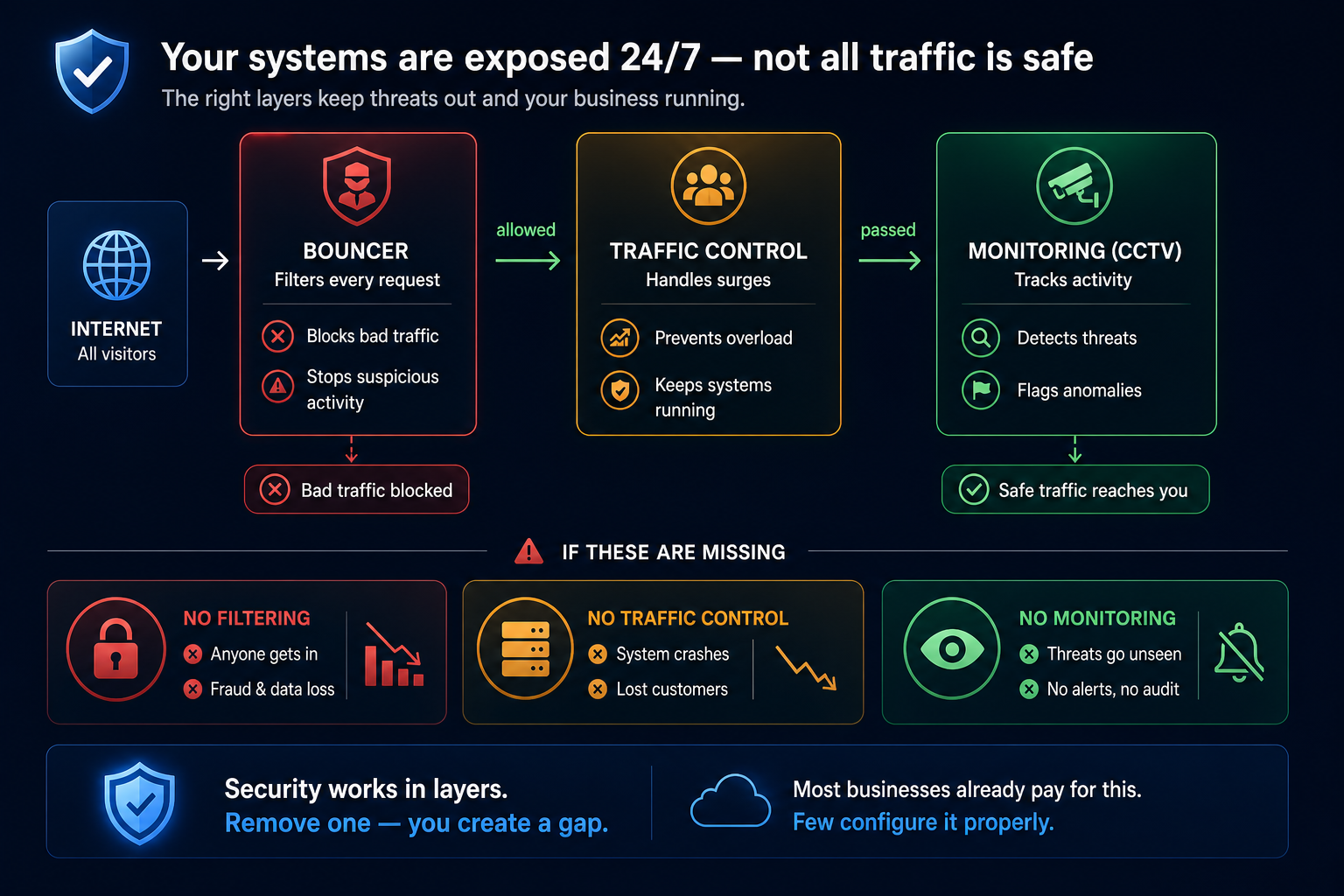
Internet-facing systems are always accessible, which means:
- Trust is not a default: Incoming traffic cannot always be trusted.
- Volume is unpredictable: Request volume can spike suddenly.
- Exposure is a target: Entry points need active control to prevent misuse.
These aren't just security risks; they are operational risks that can be managed by adding protection layers before traffic even reaches your application.
Key Protection Layers
To reduce risk, protection layers should be added before traffic ever reaches your application.
| Goal | AWS Service | What it does |
|---|---|---|
| Filter Web Requests | AWS WAF | Blocks bots, suspicious patterns, and unwanted web traffic. |
| Handle Traffic Spikes | AWS Shield | Protects against DDoS events to keep your site online. |
| Inspect Network | Network Firewall | Monitors and filters all traffic entering your environment. |
| Manage Entry Points | Load Balancers | Acts as a controlled "Front Door" for all incoming users. |
Don’t ignore staging or test environments
Protection should not only exist in production. Old domains, temporary test servers, and staging sites are often the "forgotten" doors that stay unlocked. If it’s on the internet, it needs the same protection as production.
Why This Matters
Unwanted traffic can cause slow response times, failed requests, or higher-than-expected costs. To a user, this looks like an unreliable app. To a business, it looks like a loss of trust.
Traffic protection isn't just about stopping "hackers". It's about ensuring your system stays stable and cost-effective.
30-Second Audit
Ask these quick questions to see where you stand:
- Exposure: Which applications are currently exposed to the internet?
- Filtering: Is AWS WAF protecting your public-facing APIs?
- Spikes: Do you have protection against sudden high-traffic events?
- Entry Points: Are you using load balancers, or are servers exposed directly?
- Shadow IT: Are your non-production environments just as protected as production?
Next Step
If you haven't reviewed your "Front Door" security in a while, it’s easy for gaps to appear.
Skybit can help with a focused review of your traffic protection to ensure your systems stay stable and secure.
support@skybit.cloud
skybit.cloud
Skybit Tech Bytes: The AWS Security Series
- Building a Secure Foundation
- Managing the Front Door (Reading Now)
- Who holds the keys? (IAM)